Briargrove Comps Won't Tell You If You're Buying a House or a Lot
September 3, 2026
Pull up two Briargrove listings priced within twenty thousand dollars of each other and you might assume you're comparing two houses. You're not always. In this neighborhood, one of those numbers could represent a 1950s ranch with fresh paint and updated plumbing. The other could represent roughly 9,000 square feet of dirt with an expiration date sitting on top of it.
That distinction matters more here than in almost any other Houston neighborhood I work in, because Briargrove's market runs two parallel tracks at once: buyers purchasing a finished home, and buyers purchasing land that happens to have a structure on it for now. Median price per square foot blends both groups into one number, which means it tells you almost nothing about what a specific listing actually is until you look closer.
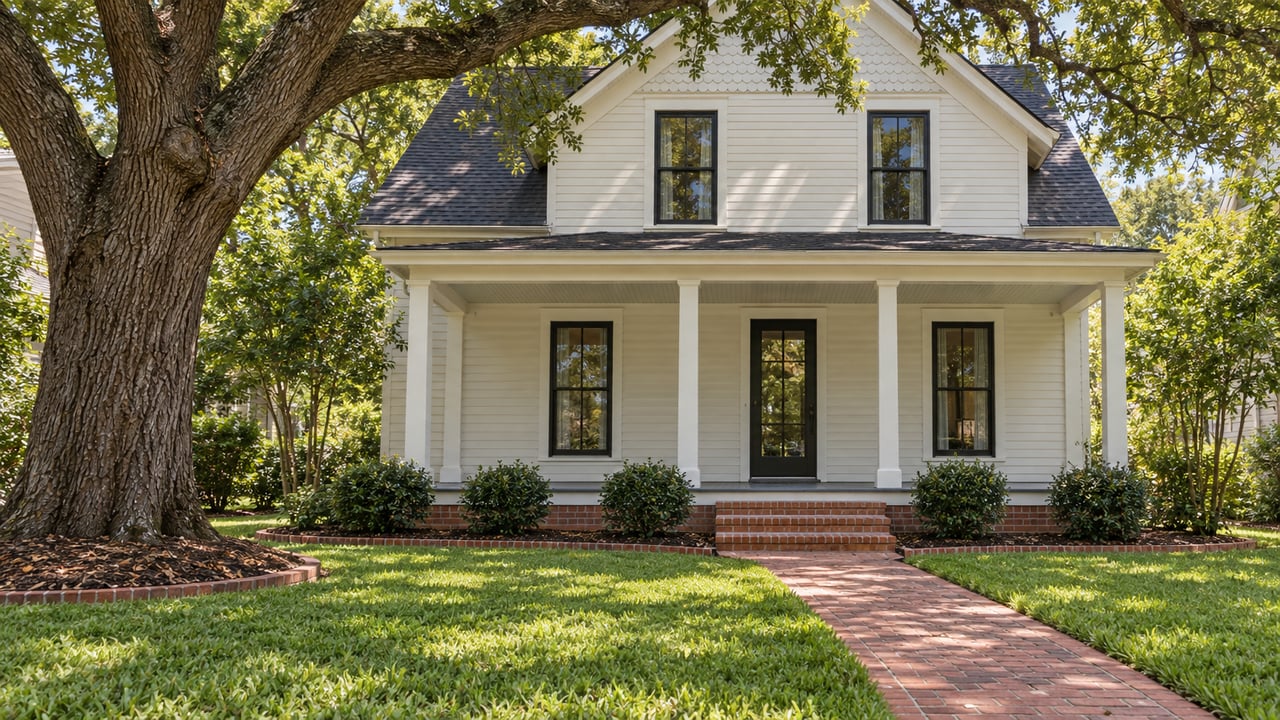
Briargrove was developed starting in the early 1950s by Lawler & Company, laid out with curved streets and cul-de-sacs meant to slow through-traffic, on lots that mostly run 8,000 to 10,000 square feet or more. The original housing stock, roughly 900 homes, was built almost entirely as single-story ranch construction. That generation of house is now seventy-plus years old.
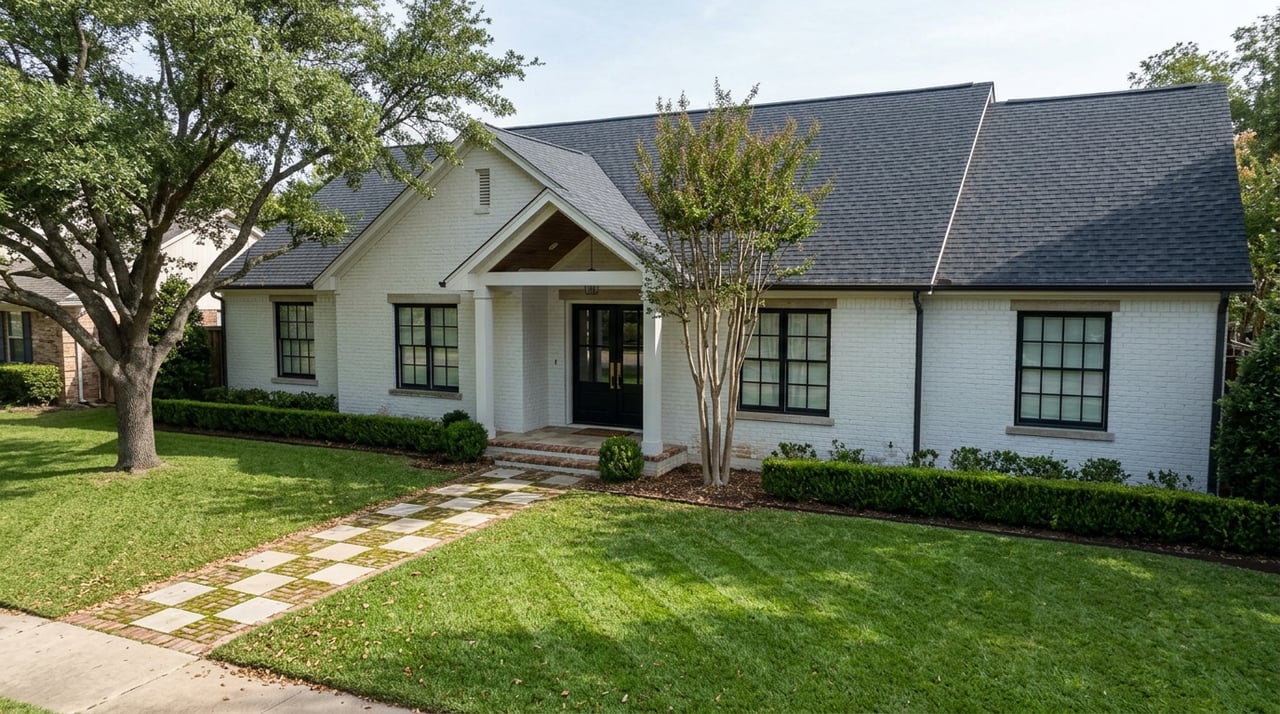
Some of those ranch homes have been renovated and are genuinely being sold as houses: kitchens rebuilt, foundations addressed, systems modernized. Others are sold with the understanding, spoken or not, that the buyer's real interest is the land underneath. Local market watchers who track the neighborhood closely have flagged a recurring pattern here for years: older homes purchased primarily for the lot, then replaced with two-story new construction. That pattern is a big part of why median values in Briargrove keep climbing even when the visible housing stock looks unchanged from the street.
If you're comparing a $1.2 million renovated ranch to a $1.2 million teardown candidate on a similar lot, you are not comparing like to like. You're comparing a finished product to raw material. Treating them as interchangeable is where buyers get their math wrong.
Before you fall for a price-per-square-foot number, ask which market you're actually looking at. A few quick tells:
| Signal | Likely a house purchase | Likely a lot purchase |
|---|---|---|
| Listing language | "Updated," "renovated," "move-in ready" | "Prime lot," "build your dream home," "as-is" |
| Age of major systems | Recently replaced HVAC, roof, plumbing | No mention, or original to a decades-old build |
| Comparable sales nearby | Other renovated homes | Recent teardown-to-new-construction sales on the same block |
| Marketing photos | Interior staging | Exterior and lot lines emphasized |
None of these signals are definitive on their own. Together, they tell you whether you should be running renovation math or land-plus-build math, which produce very different total costs and very different timelines.
If you do decide the lot is the asset and you're building new, Briargrove already has an active custom-build market to benchmark against. One new-construction listing in Briargrove Section 1, built in 2026, came to market at 4,814 square feet, five full bathrooms, on a 6,940 square foot lot, priced at roughly $467 per square foot. That figure gives you a real, current anchor for what finished new construction commands in this specific pocket of the neighborhood, separate from whatever the underlying land alone might be worth.
Builders active in the area include firms like On Point Custom Homes, named Houston's Custom Builder of the Year in 2023, which lists Briargrove alongside Tanglewood and West University among its primary service areas.
If a teardown is a possibility for you, factor in the architectural review process enforced by Briargrove Property Owners, Inc. Its approval calendar is separate from your project schedule.
Plans have to be submitted by the 10th of the month to get a response by the 10th of the following month. That's not a typo. If your architect finishes drawings on the 11th, you're waiting roughly two full months for a yes or no, not one. Once a project is approved, the oversight doesn't stop there:
Some Briargrove sections carry additional design requirements written directly into the recorded covenants. Section One's declaration, for example, requires that at least half of the front facade of any single-family home be masonry or brick veneer, unless the architectural committee approves otherwise. That's not a suggestion in a homeowner newsletter. It's recorded language that a title search will surface.
None of this makes building in Briargrove a bad decision. It makes the calendar a real cost. If you're comparing a renovate-in-place timeline against a buy-the-lot-and-build timeline, the ARC review cycle alone can add a month or more before a shovel ever goes into the ground, and that's before the framing and slab surveys layer on additional checkpoints during construction. A build timeline should account for Briargrove's own approval rhythm.
If you're cross-shopping Briargrove against nearby areas like Tanglewood or Briargrove Park, the honest comparison isn't just lot size or school zoning. It's which kind of transaction you're actually signing up for, and how much friction that transaction carries before you get the keys, or the permit. A renovated Briargrove ranch can close in the same timeframe as any other resale. A lot purchase with new construction in mind carries the ARC calendar as a fixed cost of doing business, on top of whatever your builder's own schedule requires.
The neighborhood's deed restrictions exist to protect the character that makes Briargrove worth buying into in the first place. But protection and speed are usually in tension, and it's worth knowing which side of that tension your specific purchase falls on before you write an offer.
How do I find out if a specific Briargrove lot is in Section One, where the masonry requirement applies? Deed restrictions are recorded by section, and they vary. A title company or your agent can pull the specific recorded covenants for the property you're considering before you write an offer, so you know exactly which architectural rules apply.
Does the ARC approval calendar apply to renovations too, or just new construction? Both. Significant remodels, new roofs, and pools all go through the same review committee, though the scope of review is generally lighter than for full new construction.
Is a teardown always the better financial move if the land is worth more than the house? Not automatically. It depends on what finished new construction is actually commanding in that specific pocket of Briargrove versus your all-in cost to buy, hold through ARC review, and build. That's a calculation worth running with real current numbers before you commit to either direction.
If you're trying to figure out which kind of Briargrove listing you're actually looking at, or whether the math on a renovate-versus-rebuild decision makes sense for your specific lot, I'd rather walk you through the real numbers than let a median price-per-square-foot figure make the decision for you. Casey Charles works these calculations directly, without handing you off to someone else partway through. Let's Connect.
This article is general information, not legal, tax or financial advice. Consult a qualified professional about your situation.
Stay up to date on the latest real estate trends.
You work with Casey from the first showing to closing. No hand-offs, no buyer’s agent team standing in for her. Just direct answers and a strategy built around your situation, backed by years of experience.